
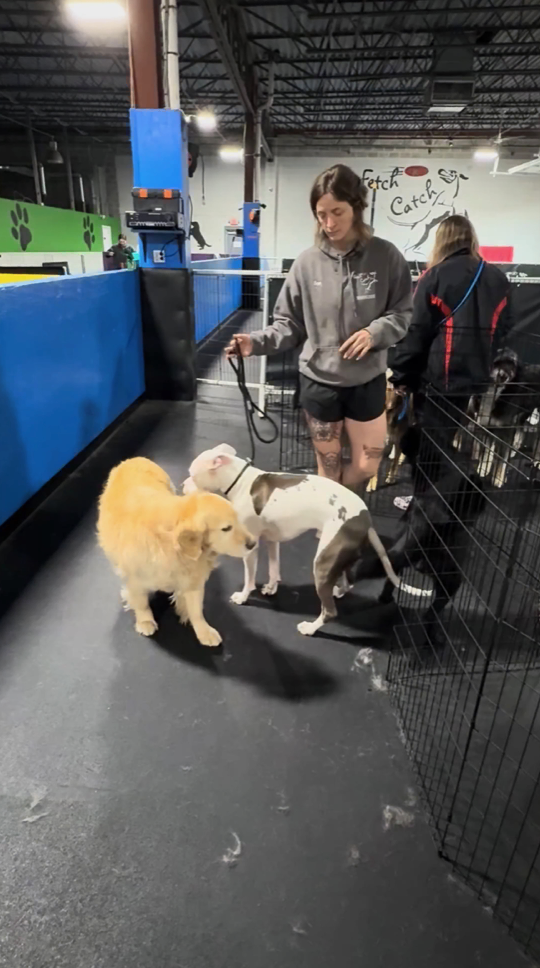
Evaluations for group daycare – whether they be large style groups or small – should be handled with the utmost responsibility and care. We should be evaluating for much more than just social skills alone.
So what should we be looking for during evaluations?
- Social Drive
- Obedience Skill
- Willpower
Social drive is going to be the dog’s desire to be around and to mingle with other dogs. We want dogs who are going to range from neutral / calm to energetic / playful. Overall, we want to avoid dogs that are solely tolerant or dogs that are continuously looking for ways to get dogs away from them. Good social drive looks like walking around, sneaking sniffs, easily moving with the group/handler, initiate play, retaliate play, etc. Tolerance looks like finding a spot in the yard and
staying there, moving away from dogs who try to sniff, sitting down when approached, teeth barring or correcting when dogs are in their space, etc. Although these things may be subtle, over time tolerance may deplete causing stronger reactions in time.
Obedience skill is not something that we should look past. Although daycare is not a training program, we do want to make sure that we are requiring dogs to have enough behavior skills to be able to safely manage them in groups. Daycare can be high risk when arousal meets dogs that do not care to respond to recall or allow for the handler to redirect them.
Willpower is going to be a dog’s ability to handle frustration, pressure or difficult scenarios. Evaluators and handlers should understand the pressures that exist in the daycare environment. Whether it be dogs in more confined spaces with one another, shared water buckets / equipment, coming into groups on leash or being on leash during a timeout, etc. We should include dogs’ attitudes around frustrating scenarios in all of our evaluations. Although we may
not experience it on the initial evaluation with the dog, we must keep in mind that we have the responsibility to gather the data as the dog becomes comfortable at our facility.
However long your evaluation process is, we should aim to be gathering data each time the dogs visit with us. When a dog becomes comfortable after several visits, we are responsible for measuring the dog’s success within play, handler engagement and overall willpower and attitude within the group. Thorough evaluations along with long term behavior check ins increases safety and stability within groups.
Last Updated on May 6, 2026