
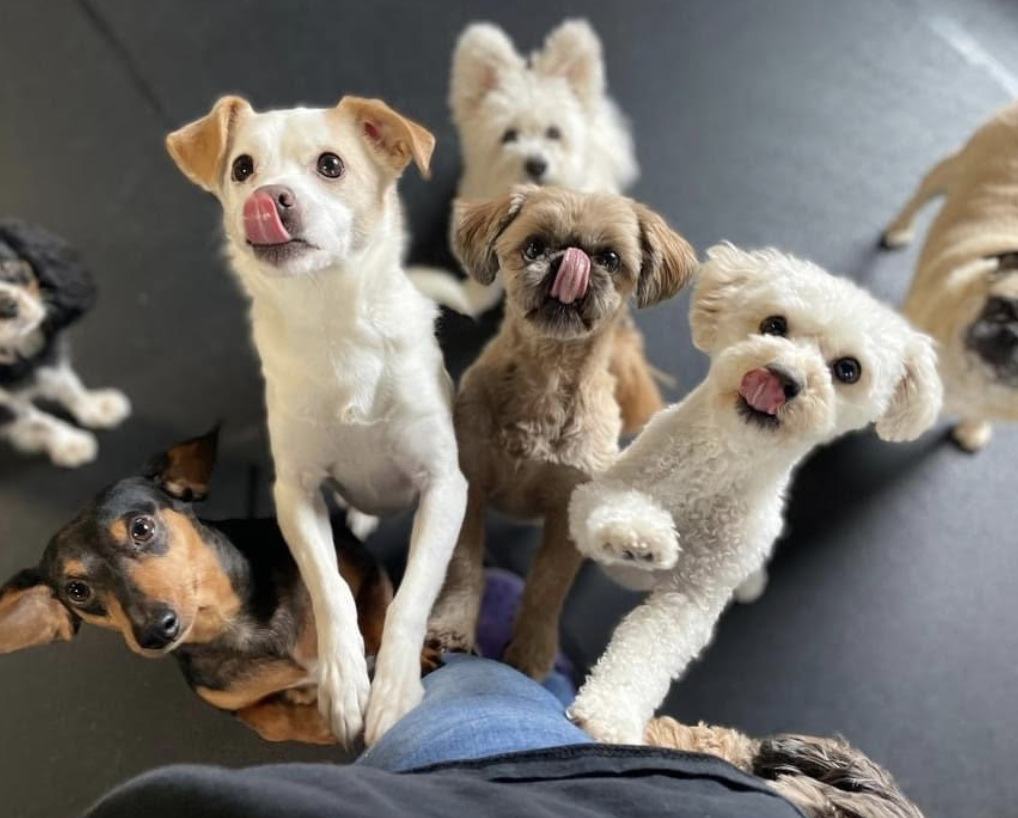
Dog daycare groups are similar to a melting pot. We place a variety of dogs from different backgrounds, energies, genetics, skill sets, etc. all in a room together. There are several variables that are out of our control when it comes to creating daycare groups. One thing that is in our control is our safety protocols and policies. Regardless of experience, mixing large dogs with small dogs significantly increases risk in groups. Here’s why:
Prey Drive and predatory drift
Prey drive is the natural instinct to stalk, chase and capture, often triggered by movement. If a larger dog has any amount of prey drive, a small dog moving quickly within the group can trigger the instinct. Prey drive is not always predatory (capturing and killing) it can also relate to the game of chase, tracking or possessing.
Predatory drift is when high arousal during play shifts to predatory drive. Managing arousal is required in groups, however the risk of different sizes of dogs playing increases the risk of this scenario tenfold. If a large dog is playing with a dog more than half the size of them, whether the small dog begins to move fast or squeals, predatory shift can be fatal.
Unbalanced play pairs
Significant size differences within dogs in groups can lead to unbalanced play pairs. Although dogs may get along or be interested in playing with one another, the difference in size can and will lead to accidental injury. Even if unintentional, the chances of injury increase significantly as you mix sizes.
Even if you have personal experience with mixing sizes going well, it cannot be argued that it is low risk, even with thorough evaluations and supervision. There are many variables that we must look at when running our facilities and creating our play groups but one variable we have to control is the safety of dogs via separating by size.
Last Updated on June 4, 2026